


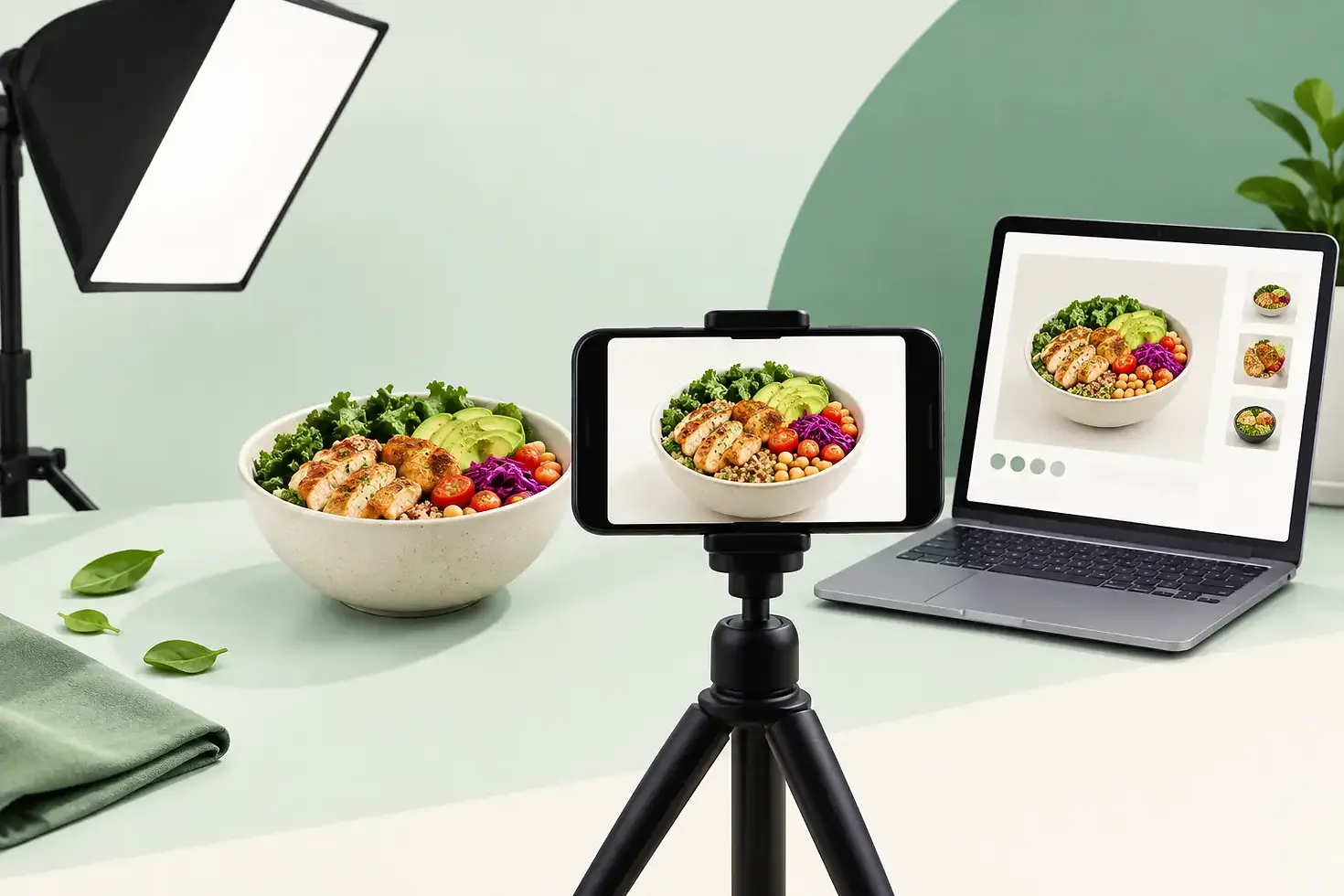
Food Photography for Ecommerce Products That Sells

A shopper has stopped on your product page. They can see the price, the ingredients, and the delivery details, but they cannot smell the coffee, break open the cookie, or taste the sauce. Food photography for ecommerce products has to bridge that gap quickly. It must make the product look genuinely desirable while giving customers enough visual information to buy with confidence.
For a food producer, bakery, meal brand, or specialty supplier, this is more than a matter of making a website look polished. Your product images carry much of the sales conversation. They explain scale, texture, packaging, flavor cues, and quality before a customer has read a single line of copy.
Start with the job each image needs to do
The strongest ecommerce photography is rarely one beautiful photograph repeated everywhere. A marketplace listing, a product page, a social ad, and a wholesale presentation may all feature the same product, but each has a different job.
The lead image needs clarity. A customer should immediately understand what is for sale, whether that is a jar of preserve, a tray of brownies, a bag of coffee, or a prepared meal. The product should be well lit, accurately colored, and easy to identify at a small size. This is often a clean pack shot on a white or carefully chosen plain background.
Supporting images can do more persuasive work. They show the product in use, reveal a close-up texture, make portion size clear, or place it in a serving moment that suggests an occasion. A bottle of hot sauce may need a crisp standalone image, then a second frame drizzled over food, and perhaps a third showing the label detail and bottle scale beside a hand.
Before a shoot, decide where the photos will appear and how they will be cropped. This prevents a common problem: creating a striking wide image that leaves no usable room for the square product-card format used across an online store.
Food photography for ecommerce products needs consistency
A single excellent image cannot carry an untidy catalog. When products sit side by side in a collection page, inconsistent angles, shadows, background colors, and package sizes can make a well-made range feel less considered than it is.
Consistency does not mean every frame must look identical. It means the customer can recognize a visual system. Perhaps every product is photographed front-facing with a soft shadow, while recipe and serving shots use warm natural textures. Perhaps a premium confectionery range uses a darker, more sculptural approach. The choice depends on the brand, the price point, and the customer you want to attract.
The essential point is to agree on the approach before photographing the full range. Test one or two products first. Look at them on the actual website, not just on a large monitor. Small thumbnails can expose issues with pale packaging, low contrast labels, or props that distract from the item being sold.
Accuracy earns trust
Food styling should heighten appetite, not misrepresent the product. If a cake is sold frozen, a styled slice can still show its texture and serving potential, but the product listing should not imply that it arrives as an elaborate plated dessert. If a pouch contains six servings, do not photograph a generous table spread that suggests otherwise without clear context.
Color accuracy matters just as much. Customers notice when a product delivered to their door looks markedly different from the photograph. Packaging color, label text, garnish, and the food itself should be handled carefully in both lighting and post-production. A rich tomato sauce should look inviting, but it should still look like your tomato sauce.
Build a useful image set, not just a hero shot
A practical ecommerce brief usually includes a mix of clean product images and appetite-led supporting content. The right balance varies. A straightforward pantry product may require more label-focused pack shots, while a premium dessert, meal kit, or gift box benefits from a fuller visual story.
For most food ranges, consider capturing these distinct views:
A clear primary pack shot for category pages and sales platforms.
Alternate angles that show shape, depth, closures, or side-panel information.
Detail images of texture, ingredients, or craftsmanship.
In-use photographs that show serving suggestions and occasions.
Scale cues, such as a hand, a cup, a plate, or an opened package.
Not every product needs every image. A small-batch chili oil may need its label, pour, and food pairing. A box of hand-finished chocolates may need an overhead arrangement, the box opened, and a close detail of the fillings. The goal is to remove the questions that stop customers from adding the item to their cart.
Prepare the product as carefully as the set
Good photography cannot compensate for damaged labels, dented tins, tired herbs, or food that has been sitting under lights too long. Preparation is where much of the work happens, particularly when multiple products must look their best within a limited shoot window.
Send the best available samples, with extras. Packaging often picks up fingerprints, scratches, and tiny creases that are invisible until the camera sees them. For dishes, baked goods, or fresh ingredients, plan the order of shooting around what will hold well and what must be made at the last possible moment. Ice cream, fried food, pours, fresh herbs, and delicate garnishes all need particular attention.
Props should support the product rather than turn the frame into a generic kitchen scene. Choose surfaces, plates, linens, and utensils that fit your brand's character. A rustic ceramic bowl may suit an artisan soup range; it may be entirely wrong for a clean, modern protein brand. In most ecommerce images, restraint is useful. The customer is buying the product, not the prop collection.
Leave space for crop and copy
Ecommerce platforms are demanding. One platform may require a square image with a white background, while a banner ad needs a wide landscape crop and a seasonal campaign needs room for headline text. Photographing with these layouts in mind protects the usefulness of every asset.
During planning, identify required orientations and any non-negotiable platform rules. If the leading image must have a pure white background, shoot it properly rather than trying to force a lifestyle image into that role later. Then create more expressive assets for your own website, email marketing, social content, and advertising.
Show the food experience, not only the package
Pack shots are essential, but food is emotional. Customers buy a jar of marmalade because they can imagine breakfast; they choose a meal kit because they picture an easy evening around the table. Serving photography gives the product a life beyond its packaging.
This is where hospitality experience becomes valuable. A convincing food image depends on understanding how food behaves, how steam, shine, texture, and garnish read on camera, and when a dish needs to be rebuilt rather than endlessly adjusted. The most natural-looking serving scene is often carefully prepared, but it should still feel believable.
People can also add value when they have a purpose in the frame. A baker dusting a loaf, a chef finishing a dish, or a customer sharing a table can communicate care and occasion. For ecommerce, use these moments selectively. They work best as supporting images, where the product remains visible and the human story reinforces the brand.
Plan for reuse before the shoot begins
Commissioning photography is more cost-effective when the resulting library works hard over time. A well-planned day can create product-page imagery alongside seasonal campaign material, retailer-ready assets, social crops, newsletter headers, and press photographs. That does not mean shooting everything at once without focus. It means organizing the day around clear priorities.
Start with the products that drive the most sales or are about to launch. Capture the required clean images first, then move into recipe, lifestyle, or seasonal scenes. If new packaging is coming soon, it may be wiser to photograph a smaller interim set than create a full library that will date quickly.
Share packaging files, brand colors, shot lists, platform specifications, and reference images in advance. References are useful for discussing mood and structure, but the final photography should reflect your own food, people, and point of view. A local bakery, specialty producer, or hospitality brand has more to gain from recognizable character than from copying a trend that will feel dated next season.
The best product photography makes buying feel easy while preserving the details that make your food worth choosing. Bring a clear brief, the best possible samples, and an honest view of what customers need to see. From there, a thoughtful shoot can turn a catalog of products into a shop customers want to spend time in.


Comments