


A Commercial Food Video Production Guide

Updated: Sep 4
A burger can look exceptional on the pass and still fall flat on camera if the light is wrong, the action is rushed, or the story has not been decided. That is why a commercial food video production guide should begin well before the first plate is dressed. For restaurants, hotels, bakeries, producers, and hospitality venues, the strongest films do more than show food. They give potential guests a feeling for the flavor, the people behind it, and the atmosphere they can expect when they arrive.
Start With the Job the Video Needs to Do
A food film is not automatically a marketing asset just because it looks beautiful. Before planning shots, decide what the video needs to achieve. A short social reel introducing a new brunch menu has a different job from a website film for a destination hotel, a chef profile for press use, or a campaign promoting a local food producer.
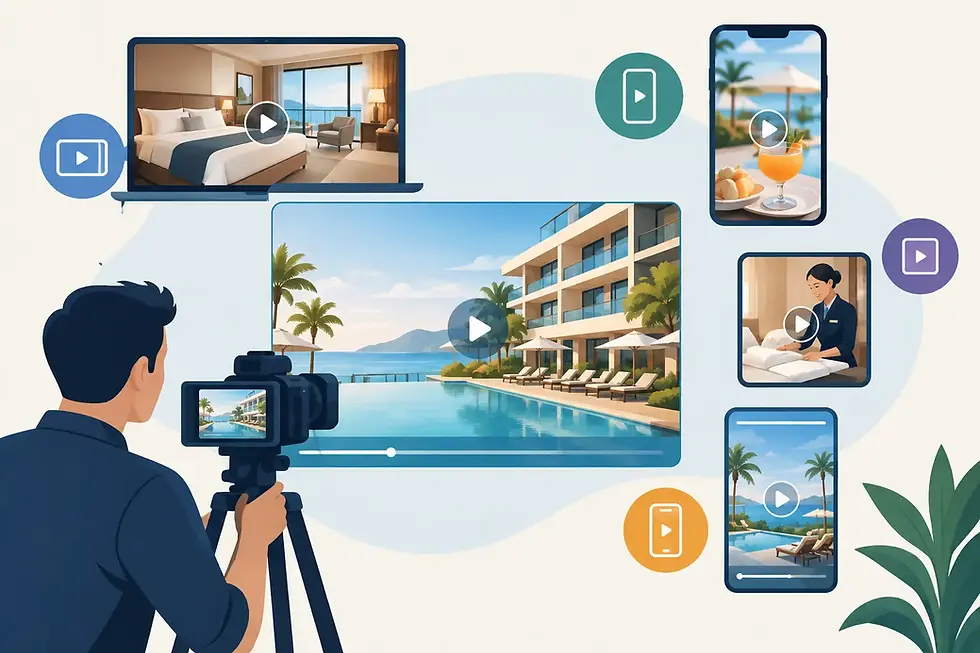
Be clear about the audience and where they will watch. Vertical video works naturally for Instagram, TikTok, and paid social placements. A website homepage may need a wider, more considered film with room for landscape, interiors, people, and a clear sense of place. If the content will be used across several channels, plan for both orientations from the outset rather than trying to crop a landscape edit into a vertical format later.
Build a Story, Not a Shot List of Dishes
Food is usually the hero, but it does not need to carry every frame. A film becomes more memorable when it shows the craft around the plate: dough being shaped, a grill flaring, a bartender finishing a drink, a server setting a table, or a chef checking a final garnish. These moments make the food believable and give viewers a reason to trust the experience.
Think about what is distinctive about your business. It may be an open kitchen, seasonal produce from nearby growers, a family recipe, a chef's technique, an historic dining room, or the pace and warmth of service. One or two clear ideas are enough. Trying to communicate the menu, the history, the team, the location, and every service offering in a 30-second video often leaves the viewer with no single impression.
Agree the Deliverables Before the Shoot
A practical brief should state the number of finished edits, their intended length, their aspect ratios, and where they will be used. It should also cover whether you need still frames, captions, music, voiceover, or interviews. A 60-second brand film can generate useful shorter clips, but only if the production is planned to capture the right moments cleanly.
For example, an independent restaurant might commission a main website video, several short social edits, and a collection of vertical clips for menu launches over the following months. That approach can make a shoot work harder, particularly when staffing, preparation, and access to the venue have already been organized.
Commercial Food Video Production Guide: Preproduction
Good preproduction protects both the creative result and the kitchen. Start with a conversation between the venue, chef or kitchen lead, marketing contact, and production team. Discuss the business goals, the dishes or processes to feature, service times, visual references, and any non-negotiables such as branded packaging, uniforms, or dietary claims.
The kitchen should have a realistic production plan. Some dishes hold beautifully under lights; others need to be filmed within seconds of finishing. Ice cream, soufflés, sparkling drinks, fried food, and delicate herbs all demand careful timing. It is often better to prepare selected hero dishes specifically for camera than to rely entirely on regular service plates.
Props and surfaces deserve attention, but they should support rather than overwhelm the food. The best choice may be the tableware and glassware your guests already recognize. A few considered extras can help with styling, yet an overly dressed scene can make an honest neighborhood restaurant feel unlike itself. Authenticity is a commercial advantage when customers arrive expecting the experience they saw.
A location walk-through is useful for assessing natural light, room layout, power access, kitchen safety, guest flow, and noise. It also identifies the less obvious visual opportunities: steam at a pass, hands rolling pastry, sunlight across a bar, or the first moment a dining room comes to life.
Plan the Shoot Around Service, Not Against It
Hospitality businesses cannot simply stop operating because a crew is filming. The schedule needs to respect preparation, deliveries, staff breaks, and the busiest moments of service. For many venues, the most effective approach is to capture kitchen preparation before opening, interiors while they are empty, and real atmosphere during a controlled part of service.
Allow more time than you think for food styling and resets. A close-up pour, slice, or garnish may require several attempts to get the movement, focus, and texture right. That is normal. The aim is not to slow the team down unnecessarily, but to give important moments the attention they need.
People should be briefed in advance so no one is surprised by a camera in the kitchen or dining room. Staff do not need to perform. In fact, natural movements tend to be more convincing than staged ones. A calm explanation of where to work, when to ignore the camera, and when a particular action will be repeated helps everyone feel at ease.
When filming guests, obtain appropriate permission and make privacy part of the plan. In some cases, invited friends, regulars, or a small group of arranged diners can create genuine warmth without the uncertainty of filming a packed room. It depends on the venue, the campaign, and how central customer interaction is to the story.
Capture Texture, Motion, and Sound
Video gives food something still photography cannot: movement and sound. The crack of a crust, a spoon breaking through a dessert, a knife cutting steak, or oil sizzling in a pan can carry real appetite. These details should be captured intentionally, not treated as an afterthought.
Close-ups are valuable, but a film also needs wider shots to establish where the food belongs. Show the exterior or surrounding landscape when location matters. Include the bar, the dining room, the bakery counter, or the producer's workspace. Alternate intimate food details with human activity and environmental shots so the edit has rhythm.
Natural sound can add character, though it is not always usable in a busy kitchen. Extractor fans, clattering pans, music, and conversation can compete with dialogue. If an interview with a chef or owner is part of the film, choose a quieter setting and record it separately from the busiest action. Captions are worthwhile for social viewing, where many people watch with the sound off.
Edit for Attention, Then for Longevity
The edit is where the planned story takes shape. The opening seconds need a strong visual reason to keep watching: a flame, a pour, a finished plate, a lively room, or a face with real presence. But fast cutting is not always the answer. A high-energy street-food launch and a calm country hotel should not feel like the same film.
Music, pacing, color, and typography should reflect the brand rather than chase a passing trend. A polished edit can be contemporary without making a heritage pub feel artificial or a chef-led restaurant feel generic. Keep text on screen concise, especially on mobile, and ensure key messages are readable within the time viewers actually give them.
Review feedback works best when it is consolidated. Appoint one person to collect comments from owners, chefs, and marketing colleagues, then send a clear set of priorities. Conflicting individual feedback can turn a focused film into a compromise that serves no one particularly well.
Set a Budget That Reflects the Useful Life of the Content
Video budgets vary because the scope varies. A half-day social shoot is not the same as a multi-location campaign with interviews, specialist styling, actors, extensive editing, and multiple deliverables. Rather than beginning with a fixed number alone, consider the content's commercial use and how long it should remain useful.
Ask what is included in planning, filming, editing, revisions, music licensing, captions, and delivery formats. Also consider whether the shoot can capture enough material for seasonal posts, recruitment, press, and future promotions. A well-planned commission may cost more upfront than a single quick reel, but it can provide a library of relevant material that stays valuable long after launch week.
GULHOS approaches this process as a collaboration: understanding the food, the people, and the venue before deciding how best to film it. The goal is not to impose a visual style, but to make the business recognizable at its best.
The most useful next step is simple: walk through a normal day at your venue and note the moments a guest never sees up close. The hands, heat, preparation, welcome, and finishing touches are often where your next food film finds its story.


Comments