


Video Marketing That Makes Hospitality Feel Real

A guest can scroll past a beautifully plated dish in a second. But show the steam lifting from it, the chef adding the final garnish, and a busy dining room coming into focus behind it, and they can begin to imagine being there. That is where video marketing earns its place for hospitality businesses.
For restaurants, pubs, hotels, bakeries, food producers, and destination venues, video is not simply a moving version of a photograph. It is a way to communicate pace, warmth, confidence, and care. It can show the things guests cannot judge from a menu description alone: the welcome at the door, the crackle of a wood-fired oven, the calm of a bedroom, or the people who know a product inside out.
The strongest work does not try to say everything at once. It gives prospective guests a clear, appealing sense of why they should choose you.
Why hospitality video has a different job to do
Hospitality is a sensory business. People choose a place because they want a particular feeling as much as a meal, drink, or bed for the night. Still photography is excellent at making a dish, interior, or portrait look its best. Video adds movement and sequence, which makes the experience more believable.
A short film can move from the early preparation in the kitchen to the first pour at the bar, then out into a sunlit terrace or a lively dinner service. That progression gives viewers context. It shows that the food belongs to a real place, made by people who care about the result.
This matters especially when a business has genuine character that is hard to express in a single image. A country pub may have a talented kitchen team, local suppliers, and a garden that comes alive in summer. A boutique hotel may be defined by thoughtful service and the quiet atmosphere of its rooms. A bakery may be loved for the skill behind its laminated pastries. Video lets those details work together.
It also builds confidence. Guests are often deciding between several venues that appear similar online. A well-made film can answer unspoken questions: Is the space welcoming? Does the food look fresh? Is this suitable for a celebration, a family lunch, or an overnight stay? Does the business feel like it delivers on its promises?
Start with the decision you want to influence
The most useful video marketing begins before a camera is switched on. Rather than asking for “a promotional video,” decide what you need the viewer to do or understand.
Perhaps a new restaurant needs a launch film that introduces its chef, menu, and atmosphere. A hotel may need a collection of short clips for a booking campaign. A food producer might want to show provenance, process, and the people behind the ingredients. A tourism organization may be encouraging visitors to spend a weekend exploring a destination.
Those are different briefs, even when the finished films may all be under a minute. The intended audience, location, story, and call to action should shape the shoot from the beginning.
A useful conversation will cover practical questions as well as creative ones. Which dishes or experiences are most profitable or distinctive? Who needs to appear on camera? What time of day shows the venue at its best? Will filming take place during service, before opening, or with a staged table? Are there seasonal details worth capturing while they are available?
Being clear here prevents a common problem: a beautiful film that feels polished but does not support the business goal. Visual quality matters, but it has to be attached to a purpose.
What to show in a hospitality marketing video
There is no single formula, and a film should never feel like a checklist. Still, the most effective hospitality videos usually combine food or drink, people, and place.
Food and drink provide the immediate appetite appeal. Close shots of pouring, slicing, plating, baking, or serving give the viewer texture and anticipation. These moments need to be prepared carefully. A dish that photographs well does not always behave well on film, particularly under lights and through repeated takes. Timing between the kitchen and camera team is part of the craft.
People make the business credible and memorable. This does not require every member of staff to deliver a scripted piece to camera. Often, a chef concentrating at the pass, a bartender shaking a cocktail, a baker shaping dough, or a host greeting guests says more naturally. If the owner or chef has a compelling point of view, a short, well-directed interview can add real authority.
Place gives everything its meaning. Show the detail that people will notice when they arrive: a dining room before service, hands setting a table, the view from a hotel window, the entrance to a farm shop, or the landscape around a destination venue. These are not filler shots. They help viewers picture themselves in the experience.
Short-form video marketing needs a clear first moment
Many potential guests will see your video while scrolling on a phone. You have little time to earn their attention. The opening should therefore show something with immediate visual interest: a finished dish arriving at a table, flames from a grill, a striking view, a confident human face, or the first action in a recognizable process.
That does not mean every film must be fast. A luxury hotel or fine-dining restaurant may benefit from a slower pace, allowing the viewer to take in the atmosphere. A neighborhood café or takeaway may need energy and immediacy. The right rhythm depends on the brand and audience.
Sound deserves the same thought. Natural audio can be powerful: the sound of coffee grinding, a knife on a board, glasses meeting, rain outside a pub window, or the low hum of a busy room. Music can shape pace and mood, but it should support the footage rather than overwhelm it. If someone is speaking, clean recorded sound is essential. Viewers will forgive a modest image more readily than muffled words.
Plan one shoot for more than one use
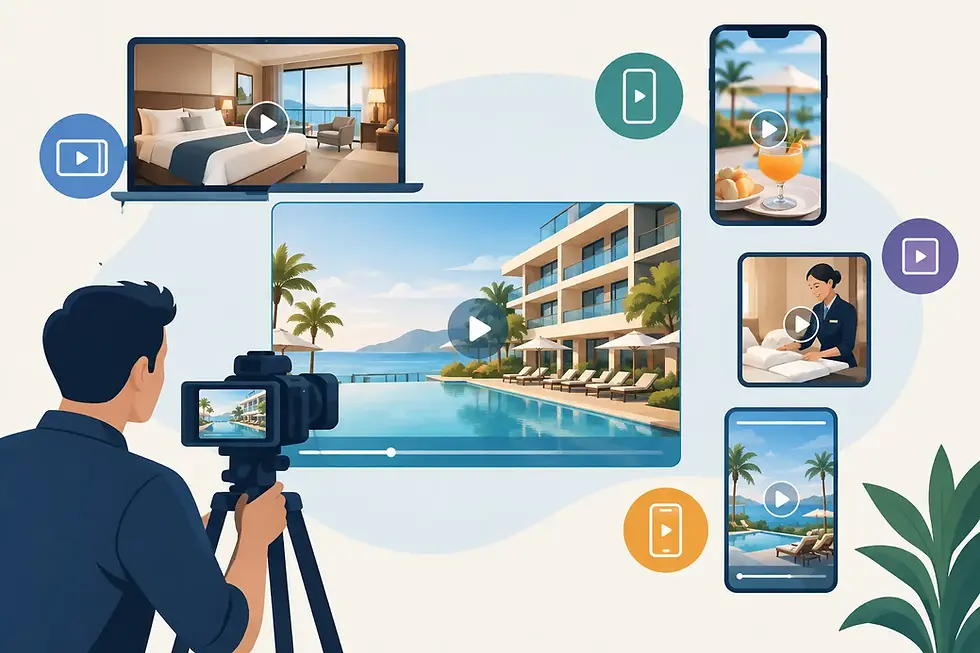
A commissioned film should not have a single, short-lived purpose. With a thoughtful shot plan, one production day can create a main brand film alongside shorter edits for social channels, website headers, event promotion, recruitment, seasonal menus, or paid advertising.
The aim is not to create endless versions for the sake of it. It is to capture enough useful material that your marketing team is not left with one film and no flexibility. Vertical clips may suit social placements, while a wider edit can sit comfortably on a website or presentation screen. Small details, such as filming key actions from more than one angle, make those later edits far more useful.
This is also why it helps to think beyond the hero dish. A new menu can change quickly, but the skill of the kitchen, the character of the venue, and the relationship with suppliers may have a longer life. Balancing timely content with evergreen material gives the investment more value.
Preparation makes filming feel easier
Clients sometimes worry that filming will disrupt service or expose a venue that is not “ready enough.” Good preparation reduces both concerns. A practical schedule, a selected menu, cleaned and styled spaces, and a named point of contact make an enormous difference.
The kitchen should know which dishes are being filmed and when. Front-of-house staff should understand where equipment will be positioned. If guests are likely to appear, permissions and filming areas need consideration. Small visual details matter too: clean glassware, fresh linens, uncluttered tables, and packaging or signage that reflects the current brand.
There is a trade-off between a controlled shoot and an authentic service environment. A staged session gives more control over lighting, timing, and presentation. Filming during a real service brings genuine atmosphere and people. Often, the best approach is a combination: capture key food and interior scenes before opening, then record the energy of service later.
Measure the response, not just the views
A large view count can be encouraging, but it is not the only sign that a film is working. For a restaurant, useful outcomes may include more table bookings, menu views, private-event inquiries, or direct messages. For a hotel, it may be stronger time on the website, more room searches, or better engagement with seasonal offers.
Pay attention to which clips hold attention, which prompts bring inquiries, and which stories people share. If viewers respond strongly to the chef, supplier relationships, or behind-the-scenes baking, that is valuable direction for future content. Video marketing improves when it becomes a regular conversation with your audience rather than a one-off campaign.
The best place to begin is often the moment your business is most itself: the first tray out of the oven, a carefully prepared plate, a warm welcome, or a view that makes people pause. Capture that truth well, and give future guests a reason to come and experience it for themselves.


Comments