


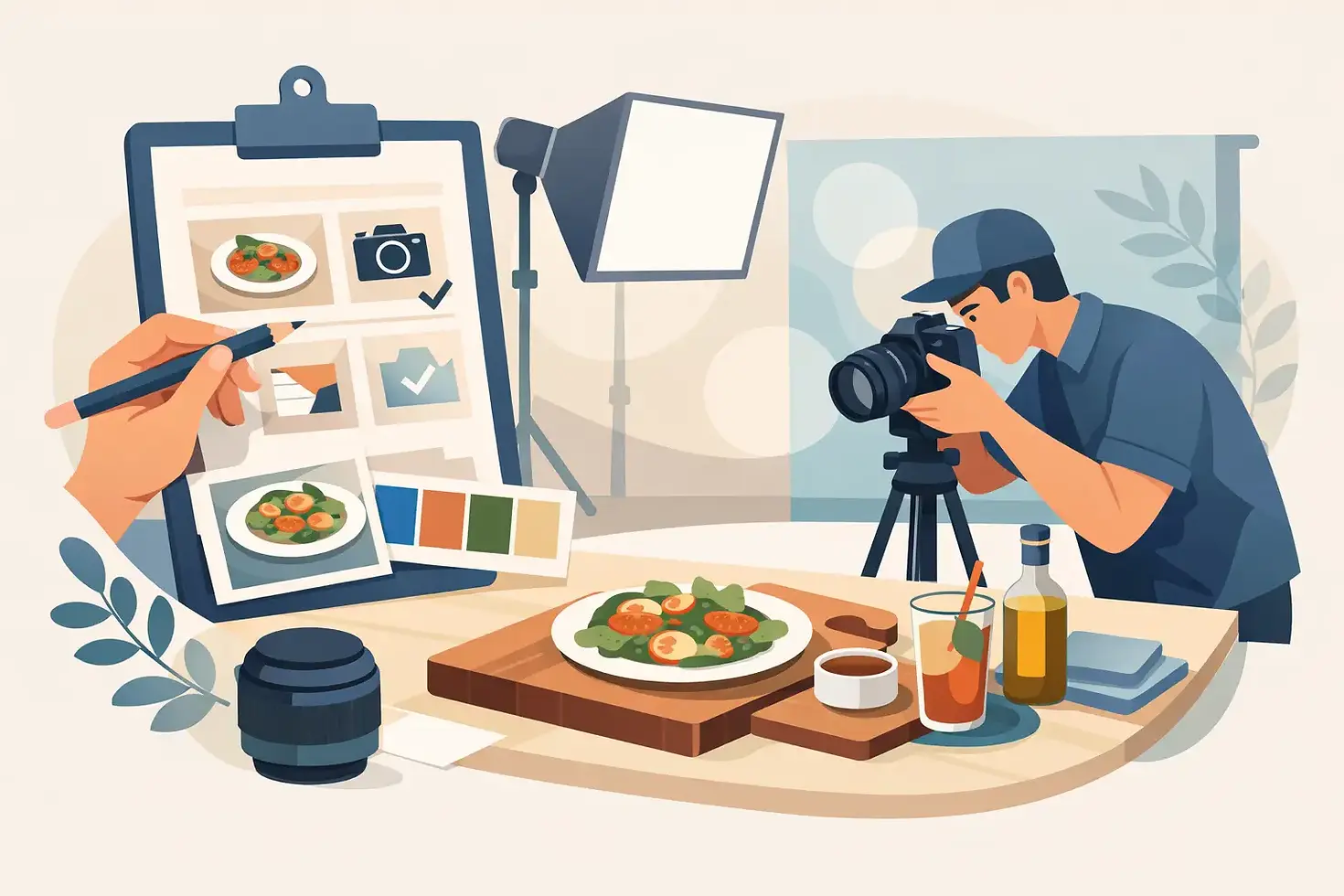
How to Brief a Food Photographer for Better Content

A beautiful plate is only part of the job. The photographs also need to work hard for your business: stopping a customer on Instagram, making a menu feel more tempting, giving your website a stronger first impression, or helping the press understand what makes your venue worth visiting. Knowing how to brief a food photographer means turning those commercial needs into a focused, well-prepared shoot.
A good brief is not a long document full of creative jargon. It is a clear conversation about your food, your customers, your setting, and the result you need. The more useful context you share before the camera comes out, the more confidently the photographer can plan lighting, styling, timing, and the right mix of images.
Start with what the images need to achieve
Before choosing dishes or props, decide where the photography will be used. A homepage banner needs a different composition from a delivery-app listing. A press feature may need horizontal images with room for text, while social content often benefits from vertical framing, close details, and a little more movement.
Think beyond the immediate post or menu refresh. If you are commissioning a shoot, it is sensible to create a library you can return to across the next season. That might include hero food images, drinks, interiors, team portraits, service moments, ingredient details, and a few wider scenes that establish the character of the place.
Be specific about the audience you want to reach. A country pub promoting Sunday lunch has a different visual story from a bakery launching postal gift boxes or a hotel attracting wedding guests. Your photographer does not need a brand presentation to understand this, but they do need to know what customers should feel and do after seeing the work.
Useful direction can be as straightforward as: “We want to look generous, relaxed, and locally rooted,” or “We are introducing a more refined evening offer and need images that show the craft behind it.” This gives creative decisions a purpose.
How to brief a food photographer with the right context
Share the story behind the menu, not just the list of dishes. Tell the photographer what is made in-house, which producers matter, what your chef is particularly proud of, and what a guest notices when they walk through the door. These details often lead to photographs with more character than a row of isolated plates.
If your restaurant has recently changed direction, say so. Perhaps you have a new head chef, a seasonal menu, a renovated dining room, or a stronger focus on cocktails and late-night trade. A shoot is an opportunity to show the business as it is now, rather than relying on old assets that no longer match the experience.
Reference imagery can help, especially if it explains a preference for mood, color, framing, or pace. It should not be treated as a recipe to copy. The strongest work comes from interpreting the character of your own food and venue, rather than trying to recreate another brand’s campaign.
It also helps to flag what you do not want. If overly dark imagery would not suit your brand, or if you want to avoid fussy fine-dining styling in favor of natural, abundant food, say so early. Clear preferences save time and make room for more productive creative choices.
Build a shot list with priorities, not restrictions
A shot list is valuable because a busy kitchen can quickly become a busy shoot. It keeps essential dishes and scenes from being missed. But it should guide the day rather than turn it into a rigid checklist that leaves no room for a better angle, changing daylight, or an unscripted moment of service.
Start by identifying your non-negotiables. These may be signature dishes, new menu items, bestselling drinks, a chef portrait, a key interior view, or images required for a specific campaign. Then add secondary images that would be useful if time allows.
For each dish, include its exact name, any important garnish or side, the preferred serving vessel, and whether it needs to appear in a particular orientation. If an image is intended for a menu, mention any crop requirements and whether text will sit beside it. A landscape image with clean space on one side is planned differently from a square, tightly framed food shot.
Avoid scheduling too many dishes simply because they are available. Ten well-considered plates, photographed with care and variety, will usually serve you better than thirty rushed images. The right number depends on how many final assets you need, how complex the food is to prepare, and whether the shoot also includes people, drinks, or interiors.
Include people and place where they add value
Food alone can be effective, particularly for product listings and menus. Yet hospitality is rarely just about the plate. Hands finishing a dessert, a bartender pouring a drink, a baker loading trays, or guests settling into a dining room can communicate warmth, skill, and atmosphere.
These images need planning too. Decide whether staff should wear their usual uniform, chef whites, or something more relaxed. Let the team know why they are involved and when they will be needed. People are generally far more at ease when they are not surprised by a camera during a pressured service.
Plan styling around what is true to the business
Food styling is often misunderstood as making food look artificial. In a commercial setting, it is more often about making sure the dish arrives looking its best, stays consistent from plate to plate, and reads clearly on camera.
Talk through who will plate the food and who has final say on presentation. Your chef may need to prepare duplicate dishes, especially for items that melt, wilt, split, or lose their shine quickly. Sauces, herbs, ice cream, fried food, and drinks with ice all have a short photographic window. Building this into the plan prevents frustration later.
Props should support your identity, not distract from it. Use your own crockery, glassware, linen, cutlery, and surfaces wherever possible, because these details make the images recognizably yours. A few additional styling pieces can be useful, but they should never overwhelm the food or suggest an experience guests will not actually receive.
Natural light can be wonderful, but it is not always the best answer. A photographer may use controlled lighting to keep the look consistent across a long day, particularly in darker dining rooms or during winter. The trade-off is simple: natural light can feel immediate but changes quickly; shaped artificial light gives greater control and repeatability.
Schedule the shoot around kitchen reality
The best shoot schedule respects service, prep, and the pace of the food. Photographing before opening can give the kitchen and dining room breathing space. On the other hand, a short period of real service may be exactly what you need for lively guest and team imagery.
Work backward from the dishes that are most fragile or time-consuming. If a soufflé must be photographed seconds after leaving the oven, it should not be waiting while the table is styled. If you need exterior images, consider the time of day, weather, and when the entrance looks most inviting.
Allow time for set changes and small adjustments. Moving from a tabletop food setup to a wide interior scene is not instantaneous. A realistic schedule keeps standards high and helps the kitchen team feel involved rather than interrupted.
Confirm responsibilities before the day
A simple pre-shoot call can remove many avoidable unknowns. Agree who is sourcing ingredients, preparing dishes, styling tables, moving furniture if needed, and coordinating staff or models. Confirm access times, parking, power, changing facilities, and whether any areas of the venue need to remain guest-ready.
Discuss image delivery as well. Clarify the number and type of final images, likely turnaround, file sizes, crops, and whether you need both horizontal and vertical versions. If video is part of the commission, the plan should account for it from the start, since filming and photography share some needs but have different timing and movement requirements.
Most importantly, give the photographer permission to ask questions. The strongest commissions feel collaborative. They combine your understanding of the business with a photographer’s judgment about light, composition, pace, and what will make a customer pause long enough to look.
A thoughtful brief does not make a shoot less creative. It gives that creativity a clear place to go. Bring your best food, your real story, and a willingness to talk through the practical details, and the resulting images can keep earning their place long after the shoot day is over.


Comments